

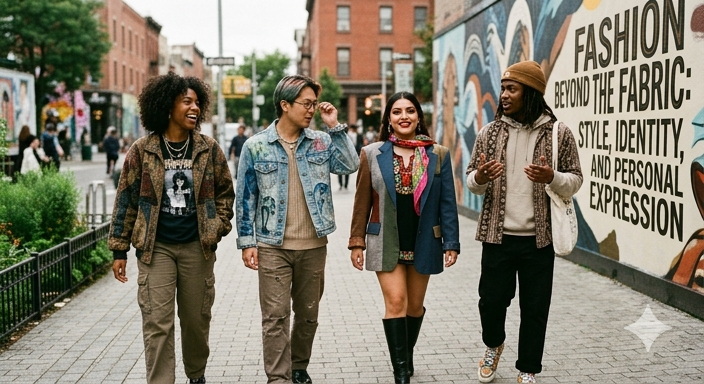
“The ‘beyond the cloth’ meaning of Fashion. This term expresses a set of meanings that clothing implies to not solely the actual material. These meanings include Identity, culture, Sustainability, craftsmanship, expression, stories etc. Fashion is therefore also about more than just what and how we wear. The concept beyond cloth, where it comes from and where it goes also play a significant role in its cultural and environmental impact”.
Why Fashion Beyond the Fabric Matters
Beyond Coverup Clothing always did more than serve the purpose of covering up our physical bodies. A woven shawl crafted by a grandmother, a concert T-shirt worn at that one defining gig, or a sharp-cut suit for that life-changing interview. Each item carries no merit purely on the weight of the fabric. It’s steep in experience and identity.
Today, as consumers and creators grow wary of fashion-driven overconsumption and the practices behind the garments. The question of what an article of clothing means rather than simply what it is is more potent than ever.
From narrating history and culture to sparking personal and political expression, the realm beyond the material of fashion, or fashion as narrative, can help inform this growing conversation. It has significant implications for brands now increasingly competing with the stories and values of their clients. For individuals, it simply offers a form of self-expression, one of the few accessible today.
Fashion Beyond the Fabric at a Glance
| Attribute | Details |
| Focus | The cultural, personal, and ethical meaning embedded in clothing choices |
| Primary Challenge | Balancing style, sustainability, and authenticity in a fast-moving industry |
| Best For | Conscious consumers, designers, students of fashion/culture, brands building identity |
| Reading Time | 7–8 minutes |
| Key Benefit | A deeper, more intentional relationship with what we wear and why |
Clothing as Identity
Long before the fashion industry came into being, clothing always told you something about who a person is? What region they hail from, their status, occupation or religion. That role hasn’t been lost, simply replaced. A streetwear hoodie, a vintage band t-shirt, or a designer blazer each implies something quite different about your’identity, affinity, and self-esteem.
Something a personal style says about a person is not necessarily taste. It may speak to that person’s cultural identity, gender identity, the type of job they want, or just how they feel that day. This may also explain why fast fashion trends can be so empty to the customer; they have no story behind them.
Fashion Heritage Tradition
It seems like an obvious starting point when you think of fashion history. The traditional textiles, weaving patterns and dress that are part of different cultures and are passed down. Batik in Indonesia, Kente cloth from Ghana, Ikat weaving throughout Central and South America. These aren’t simply patterns or trends for the designers who pass them down from generation to generation.
So often they will look at the result of a world where the global fashion house will borrow ideas from existing traditional styles and patterns, usually with less regard to credit and history behind them.
The Environment & the ethics behind fashion
Beyond the textile “Beyond the fabric” really entails looking past the item itself, what was behind this garment before it landed in someone’s closet. How it was made, by whom, and ultimately what happens to it in the waste stream. The environmental impacts of the industry, from the water-intensive crop needed to make tee-and water quality issues that arise in its production, and landfill waste. In turn – have certainly brought environmental concerns to the forefront of fashion.
This trend has led to an increased demand for:
- slow fashion – the creation of more minimal collections that will last, rather than quick season turns.
- circular fashion – making garments with end-of-life disposal and recycling in mind (by design).
- honest supply chains – when a brand explains how and where clothes are produced.
- buying secondhand or reselling clothing – essentially giving a garment more wear and care before it’s tossed out.
These trends show an emerging understanding that how much we pay is not the real cost of our clothes, considering their environmental and societal costs.
Fashion as Storytelling
Designers are also increasingly using collections to tell a story of heritage, protest, memory, or hope. A collection that references a designer’s immigrant family history or capsule range that references a specific period, or movement transforms clothing into narrative, and the storytelling also filters into how labels present themselves with brands emphasizing a collection’s “why” as much as the pieces.
For the typical consumer it shows up more subtly – the coat handed down from a parent, the dress you wore for your wedding, the trainers linked to a particular life experience all give an object meaning that’s utterly unrelated to trends.
Common Mistakes to Avoid
- Confusing identity with trends
- Forgetting about where the garment was made
- Confusing admiration and appropriation
- The myth of “sustainable = frumpy”
- Using clothes as a means of discard
- Seeing clothes as just clothes
Conclusion
Fashion has never been entirely about the material itself. It’s about the way that we self-express, who we’re rooted in, and the way we communicate to get on in the world. As both sustainability and cultural consciousness continue to change fashion in-to, of what’s considered meaningful over more. We need brands-and person as well-that see beyond the yarn to build brands with substance, those that stand the test of time. When deciding which pieces of get on in the morning, let your own reflectively expand above the fabric. Just what do this saying, or even where’s the material originating?
Frequently Asked Questions
1. What does “fashion beyond the fabric” mean?
It means thinking past what your garment is literally made of, looking at identity, ethics, culture, and narratives incorporated in its production.
2. What is a way that sustainability fits into this idea?
Sustainability is essentially about a deeper look at the fabric, about who made that garment under what conditions, what it’s eventually going to mean, beyond just what the material used or what a person wears it as.
3. How does cultural appreciation and appropriation differ?
You either collaborate with or credit/ compensate the community for a pattern that comes from, or you basically steal it.
4. Is personal style an indication of identity?
Absolutely – our clothes may reveal aspects of our culture, beliefs, personality and our state of mind, creating a visible, daily embodiment of personal expression.
5. Is slow fashion the same as sustainable fashion?
They are closely interlinked, yet not quite the same. The concept of slow fashion promotes smaller, durable collection pieces that last longer than trend-lead garments.