

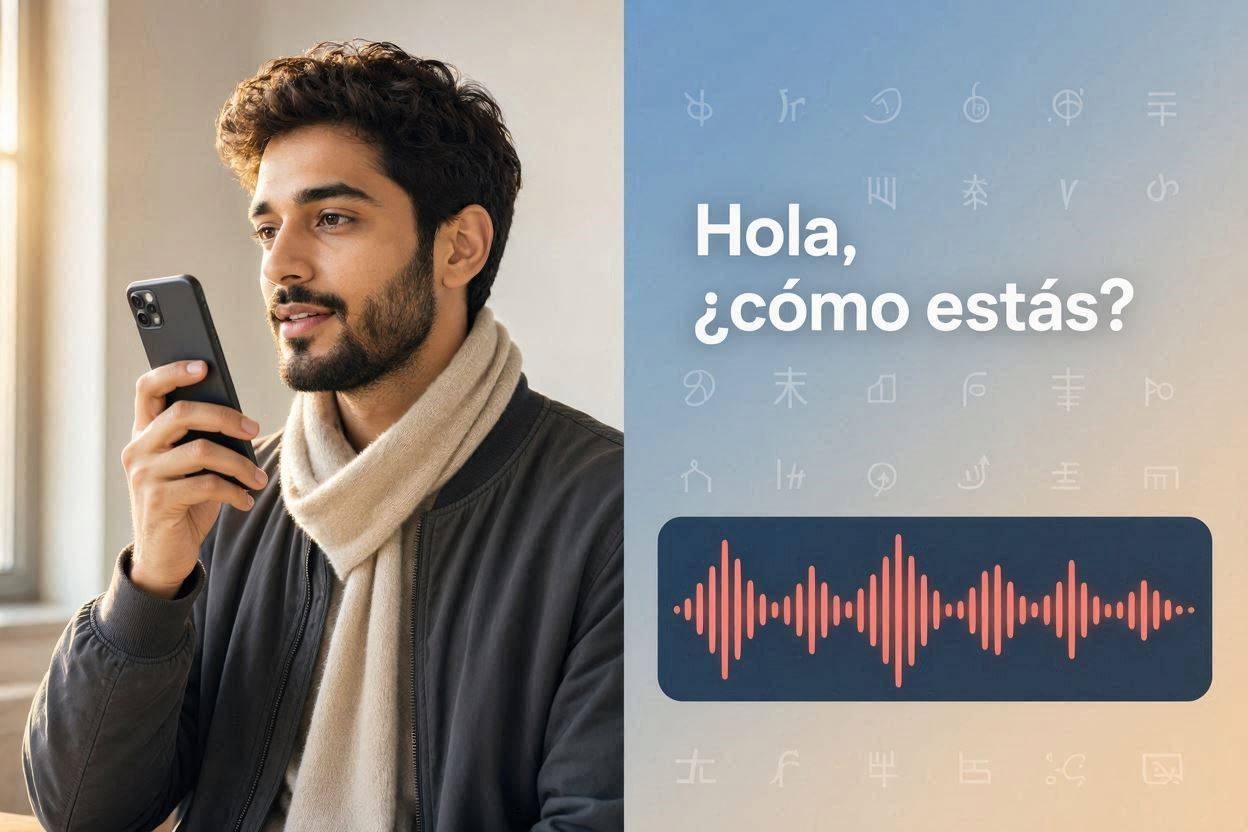
AI translators are computer programs which leverage a type of technology known as machine learning, mostly to incorporate large language models (LLMs) and machine translation (MT), or neural network translation (NNT), to translate languages almost instantly when it involves transforming spoken and written texts, pictures and even voice to a preferred language. The newer generation of AI translates do have the ability to account for more than just translating word to word. These translations are equipped to understand subtleties and tones, take idioms into consideration, making it useful for everything such as business, education, client service, tourism, as well as many more.
Why AI Translators Matter
Now a support ticket arrives from Portugal, a supplier document is in Mandarin, a product review is in German – and it is only 4 PM. Having a native human translator involved in every transaction of our personal and global teams has become a logistical impossibility, with human translation efforts giving way to an infrastructure of AI machine translation solutions.
This acceleration accelerated drastically when neural machine translation supplanted the older statistical models. Instead of matching fragments of text to one in the lookup table – something that leads to clunky translations like the example provided earlier – neural machine translation models learn the relationships between words across entire sentences, explains that this is what “Google Translate, DeepL, and Microsoft’s products now offer”. Add language models on top and the AIs can now retain the user’s tone, translate a wide range of idioms and point out where a more direct translation could create cultural insensitivity.
What does that mean? For businesses: quicker customer service, localized marketing at scale, new international markets opened without hiring an entire linguistics department. For people: a phone camera that translates a dinner menu; a voice app for two people with zero common languages.
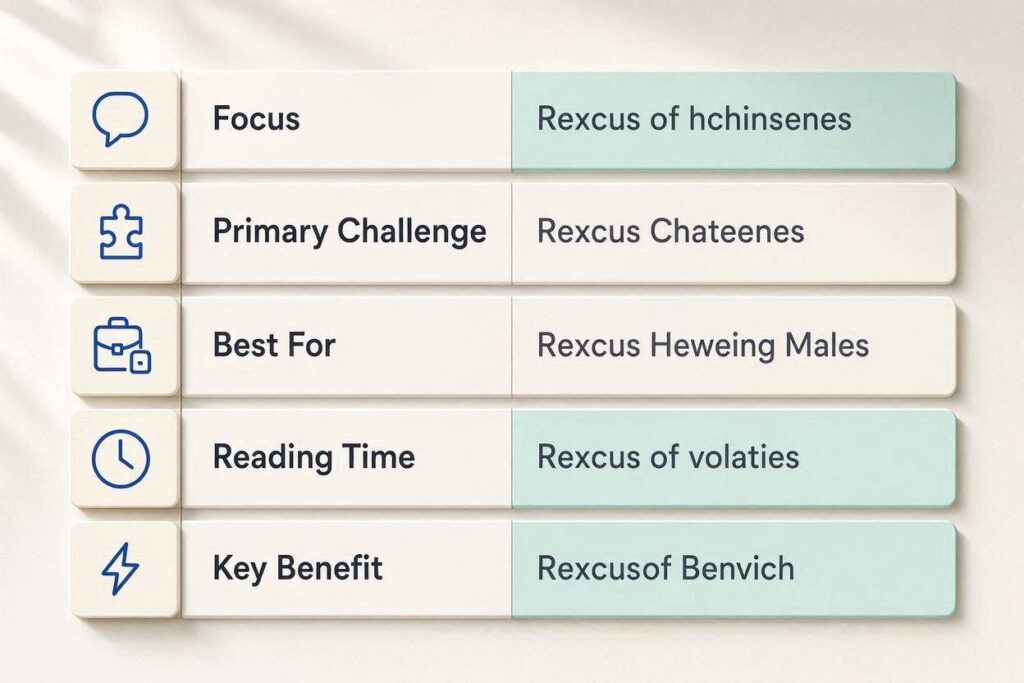
AI Translator briefly
| Attribute | Details |
| Focus | Automated language conversion using neural machine translation and LLMs |
| Primary Challenge | Preserving context, tone, and idiomatic meaning — not just literal word substitution |
| Best For | Businesses expanding internationally, travelers, content teams, customer support, students |
| Reading Time | 7–8 minutes |
| Key Benefit | Near-instant, context-aware translation across text, speech, and images at low cost |
How AI Translators Actually Work
But most current A.I.s translate using what is called a transformer architecture, which is essentially what gives even large-scale language models their capacity. Their technology can read the entire sentence in, turn it into a mathematical interpretation of the full sentence’s meaning, and then decode that interpretation into your target language. That’s why context in this kind of sentence actually continues to exist through the whole text.
Neural Machine Translation NMT
engines utilize huge bilingual datasets: the pair of sentences with the same meaning, but two different languages. The system starts building a statistical model over the training data (phrasing, word order, grammar), based on which it can generate an output that had not existed prior to translation.
How an LLM helps an AI translator
The latest breed of translation programs plugs large language models on the back of or into an existing translation engine. LLMs add more general knowledge of the world, so that they understand idioms and slang, but also can more precisely handle industry jargon, cultural differences, and sarcasm. Input a legal contract into an LLM translator and then text message and ask it to translate, and it will adjust: Older tools have been able to catch obvious keywords or jargon.
Speech and image translation
Voice-based “intelligent” translators essentially use two-step: First to translate spoken speech to text, and then convert that translated text back to speech to produce spoken words in the desired language. Image “intelligent translation”-the kind where you use your phone to translate signs by pointing it at them, etc.-uses optical character recognition to capture characters so that the translated text can go through the traditional pipeline.
Popular AI Translator Tools and Where They Shine
- Google Translate – Huge language pool of over 100 languages; a great option for fast and dirty everyday translations, it also offers integrated camera mode and conversation translation tool.
- DeepL – Many feel it’s one of the better options for more natural-sounding translations of European languages, and professionals frequently use it.
- Microsoft Translator – For users deeply enmeshed in the Microsoft ecosystem, live captions and the integrated translators within Office and Teams may prove very handy.
- ChatGPT & the LLM – stack (low-cost and generally high-quality for simple translations and adapting to context and formality, best suited for complex and creative translation
- Specialty tools tailored for different industries (i.e., legal, medical, and technical content where a blend of AI draft + human review is the expected workflow).
Ultimately, what works best depends on the task. There is no one the right way. Traveling for pleasure has requirements that are radically different to a medical release form.
Where AI Translators Are Making the Biggest Impact
The rise of business and global expansion
Companies rely on the use of AI to translate Websites, customer product support files, and customer support knowledge bases so that they don’t have to maintain dedicated localization personnel for each of the different countries where the business is located. For customer support, live chat is commonly using translation, so agents and customer representatives can converse with someone in their own language without having to dispatch to different representatives.
Travel and everyday life
Taking photos to read menu or sign, having an app working in conversation mode on your phone, has brought independent travel to non-English speaking country to a much more convenient experience.
Education
Many students now supplement new language acquisition with AI translators – either to check up their own writing, assist them with reading non-native text, or to receive instant prompts, although most teachers advise using such an app as a back-up rather than a core part of study.
Content & Media
Publishers and content creators implement AI translation in their existing workflows to translate articles, marketing materials or subtitles to foreign markets in a fraction of the original human translation times.
Common Mistakes to Avoid
- Trusting your AI for legal and/or medical material – A translated legal document or medication dosage instruction without the use of a human editor could lead to dire circumstances, not to use the context options.
- Most of your translators should have a tool – to indicate the usage such as a formal setting, or informal setting or to use a particular region dialect; otherwise, you may find yourself with rather funny sounding phrasing.
- A literal translation of an idiom – even strong AI translators will translate an idiom literally instead of the equivalent expression, so it’s good to spot-check anything aimed at customers.
- Believing all language pairings operate on an equal performance level – Some language pairings (e.g., English Spanish) will vary dramatically from others (e.g., English Danish).
- Foregoes native speaker review on client-facing copy – especially for marketing material, a final review by a native speaker will catch tone, cultural nuance, etc.
- Applies translation too heavily on creative or stylistic writing – it’s often not possible to translate poetry, humor, or brand voice on any level but approximation by AI.
Key Takeaways
- AI translators help translate text, spoken word and images between languages in real-time using neural machine translation and, increasingly, massive language models.
- Beyond a direct word-for-word transformation, today’s tools are good at conveying nuances of tone, context and meaning, much better than earlier phrase-based translators.
- Different tools are suited to different tasks, for instance, DeepL is good for producing fluid, natural-sounding translations, the Google Translate for day-to-day use in a variety of languages, Microsoft Translate for business-grade language processing and services, and LLM-powered tools are handy for producing formal or specifically toned results.
- AI translation makes it possible for companies to scale customer support and localization capabilities without having to invest heavily in a big in-house translation team.
- High-value content intended for public viewing, such as legal, medical or any other content where mistakes carry high penalties will need human review.
- Different languages will have different strengths and weaknesses when translation accuracy is concerned, so it may be worth performing a small test of your preferred translator on a sample of the content.
- For an individual learning a new language, artificial intelligence translation should only be seen as a supplemental tool, not a replacement language for learning.
Conclusion
When this occurs, AI translators have evolved from just plain helpfulness in business communication and into actual tools to support our global interactions. If your business is planning to tailor its products to consumers abroad, a tourist is planning to try the food abroad or student working on his homework, most of the regular requests would now be perfectly fulfilled with the aid of our automated counterparts. The remaining 1%- nuance, critical accuracy and writer flair-is exactly where the value of human translators remains undeniable. The mixture of automation and skill is making cross-linguistic barriers small.
Frequently Asked Questions
1. Are AI translators as reliable as human translators?
For casual conversation and basic communication, AI translators are increasingly comparable to humans for the most popular pairs of languages. It is essential to consider relying on humans to translate legal or medical documents, or text of a nuanced nature.
2. Is the most accurate AI translation tool the best choice for me?
It will depend on the languages as well as the subject you wish to have translation. Some frequently used ones include DeepL, particularly suited to translation between European languages, and Google translate, which spans the largest variety of languages
3. Can AI translators interpret spoken conversation in real time?
Many of today’s apps have a conversation mode feature, which makes use of speech-to-text and speech-to-text services layered onto an AI translation engine, to translate speech in a virtually real-time fashion.
4. Do AI translators function without internet access?
Yes – a limited number of applications have offline language packs that can be downloaded for non-internet use (but these are usually not as performant as their online-only counterparts).
5. Would using an AI translator for my business document be ok?
For non-essential or informal use, yes. For contractual, compliance or any legal documents, we strongly recommend a trained human translator double-checking the AI’s work.
6. Do you think AI translators are taking the jobs of human translators?
I’m optimistic that most folks in the translation industry believe AI does volume, AI provides speed, but that human translators will be around for cultural implications, nuance and high-level accuracy, a perfect combination of both.
7. How good is AI on handling the idioms and slang, that exist in a language?
On most newer language models, the latest LLM language translators are doing a better job of recognizing slang and idioms and translating them by finding equivalent language than directly trying to take the language literally.