

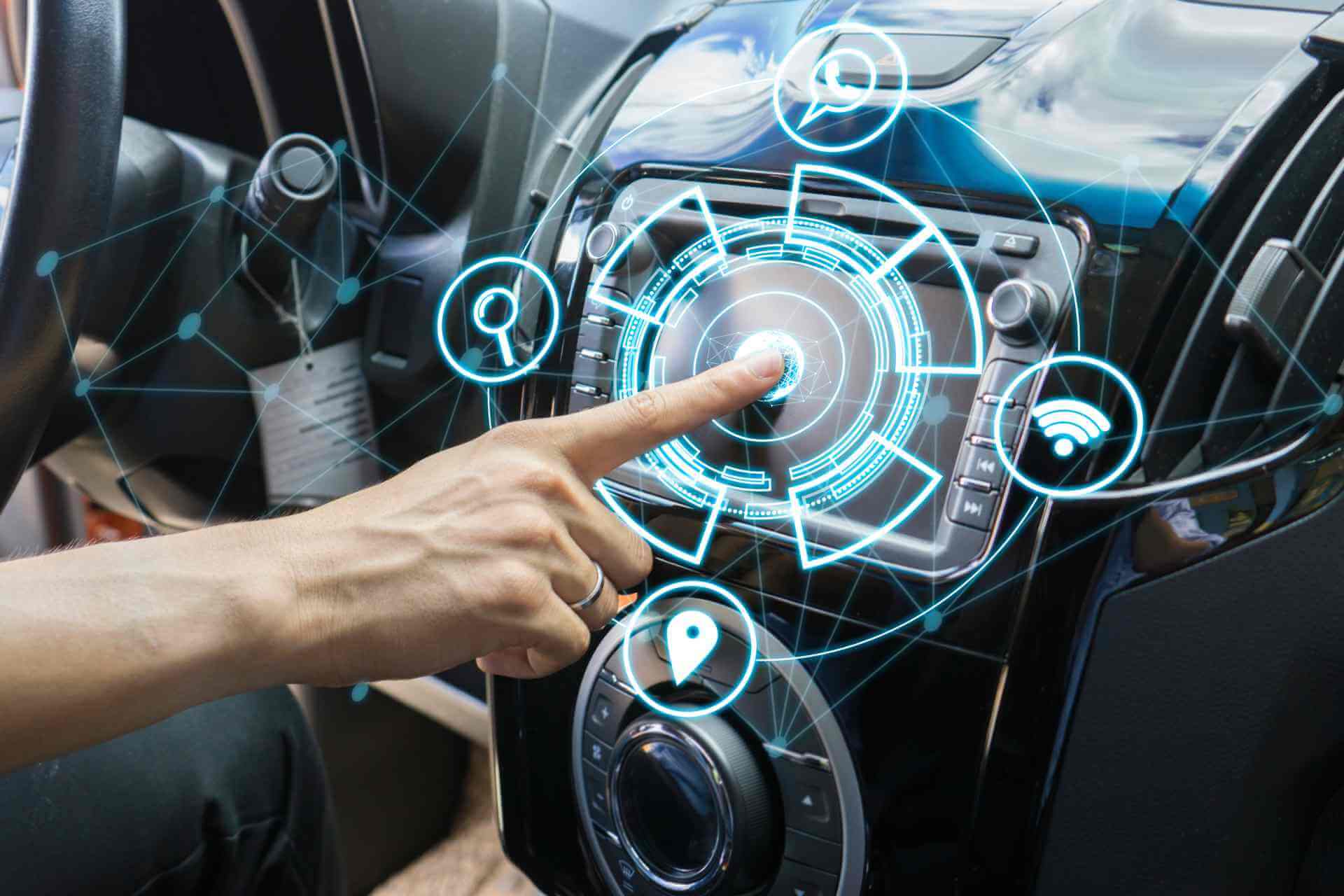
The Internet of Things (IoT) is entering a new phase, and 5G networks and the edge are playing a central role in that transformation. From smart factories and connected vehicles to remote healthcare systems and intelligent cities, billions of devices are now collecting and exchanging data every day.
Welcome to the next chapter of IoT. Smart factories, connected cars, remote medical practices, intelligent city applications – billions of devices are now collecting and exchanging information daily. As systems grow in complexity, conventional networks can reach their limits.
That’s why 5G and edge computing are more important than ever.
When combined, 5G connectivity and edge computing allow companies to process data with greater speed and lower latency, drive automation, and develop real-time IoT applications.
By processing essential data nearer to where it’s created rather than transmitting everything back to a cloud data center, edge-enabled IoT enables faster and smarter connections everywhere.
Why IoT Needs More Than Traditional Connectivity
IoT’s challenge that has come to life: The connected nature of the new devices has been a challenge all along; devices are churning out vast amounts of data. The smart factory, for instance, might deploy thousands of sensors that monitor the machines, ambient temperatures, the manufacturing lines, and even product quality. The connected car has its cameras, radar, onboard sensors and navigation.
The connected device used for healthcare can be measuring vital signs, reporting them continuously to the healthcare providers.
All of these tasks can be managed using conventional networks, in addition to distributed centralized cloud services. Not always efficient for time-critical operations. The delays that comealong withn moving data out to the distant cloud, crunching numbers on it, and finally transmitting instructions back out to the devices will simply not work for time-critical operations such as autonomous cars, smart robots, or emergency services.
That tiny delay might be just that for non-critical services, but a major obstacle for critical systems. Combining these with the edge and the emergence of the 5G era are key elements for next-generation IoT systems.
What Role Does 5G Play in IoT?
More Than Just a Speed Bump, 5G Caters to a Wider Variety of Devices.
Faster Data Transmission
The functionality of IoT devices has continued to expand. They now have more capacity to ingest video, imagery, sensor data, and other information that generate significant data volumes.
5G offers a substantial jump in data rates, ensuring that devices can talk to each other more effectively, particularly important for environments that generate significant data that needs to be exchanged rapidly:
- Smart manufacturing facilities
- Connected transportation systems
- Healthcare networks
- Smart cities
- Augmented and virtual reality applications
- Industrial monitoring systems
More importantly, a faster network can also offer improved functionality of application relies on constant data streaming.
Lower Latency for Real-Time Decisions
Latency means a lag between when information is sent and received. But in many of today’s IoT use cases, low latency may be as critical as speed.
Think of robotic manufacturing processes: When a sensor sees an obstacle and indicates that the system needs to stop or change course, a delayed response to that sensor may result in production disruption, damaged equipment, or even the safety of a worker.
Because 5G is intended to enable low-latency connectivity, enabling connected devices to send and receive data more quickly-and particularly when used with edge computing, where analysis occurs at the network’s edge-it helps IoT systems to quickly process data and respond to events.
Supporting Massive Numbers of Connected Devices
More and More Connected Devices: IoT devices are proliferating. For instance, a contemporary business may simultaneously use connected equipment ranging from cameras to computers to machines to vehicles to sensors.
In fact, in the very near future, a business’s connected devices could number in the hundreds or even thousands.
5G networks, on the other hand, were envisioned as a technology enabling a high density of connected devices in specific locations.
These would include dense urban centers, vast factory settings, logistics and fulfillment hubs, and any location with a need for thousands of devices.
What Is Edge Computing?
Edge computing alters where processing happens. Typically in the cloud, information generated by IoT devices might move to a distant data center and be processed before being sent back to the device. Edge computing brings processing nearer to where data is generated.
Instead of sending all data to the remote cloud, the organization can process relevant data on-premises, through edge gateways, devices, or localized compute nodes.
A typical edge IoT data flow:
IoT Device → Edge Processing → Immediate Response
Only necessary, filtered, or summarized data can be transmitted to a central cloud environment for long-term storage, advanced analytics, or general business intelligence purposes.
As a result, the transmission of useless data can be lowered and response times optimized.
Why 5G and Edge Computing Work So Well Together
Although 5G and edge computing serve different purposes and resolve different issues, they complement each other. 5G enables the speed and reliability to send data to networks while edge computing reduces the distance needed to transmit data back for processing.
The combination enables a high-powered environment for real-time applications used in IoT projects.
For example, consider the use of 5G and edge computing within a smart factory that features thousands of individual sensors.
Suppose one particular machine experiences unusual vibration that points to a potential failure. Normally, this data may have been processed through a series of steps with data sent across various points to a central cloud before a diagnosis or notification is produced.
However, in a 5G and edge computing architecture, the data generated from that sensor can be instantly delivered to a nearby edge machine where the data could be analysed via Artificial Intelligence. The results can then be instantly relayed to the maintenance department before the machine fails.
Long-term storage and global analytics can still take place within the cloud if necessary.
This combination can improve:
- Response times
- Operational efficiency
- Reliability
- Network performance
- Data management
- Automation capabilities
How 5G Networks and the Edge Are Transforming Smart Manufacturing
Another great use case for 5G and edge computing lies in manufacturing.
From connected sensors and automated robots to machine vision and AI, today’s factory floor uses devices that rely on stable communications and near real-time decisions.
Predictive Maintenance
Information on temperature, vibration, and machine output can be sent constantly. Edge devices can process this data in place and determine if something seems off. Companies can plan for maintenance before a machine completely fails.
It may cut back on:
- Unexpected downtime
- Repair costs
- Production interruptions
- Equipment damage
Intelligent Robotics
Quick and efficient robot work requires responsive industrial robots to react to their surroundings.
While the reliable wireless connectivity of 5G works well with on-premises edge computing that analyzes data collected by sensors and cameras right next to the production line, reliance on a remote cloud server may limit robot functionality.
Real-Time Quality Control
Cameras and AI inspect products during production. When AI and cameras check production, these image-analysis and decision-making tools run on edge-computing equipment, so a company’s systems can detect defects early and remove flawed goods from the production line immediately.
The Impact on Connected and Autonomous Vehicles
When it comes to Transportation, low latency and real-time processing play important roles as well.
Connected vehicles can communicate with:
- Other vehicles
- Traffic infrastructure
- Roadside sensors
- Navigation systems
- Cloud platforms
5G can also support communications among vehicles and their surrounding infrastructure. For instance, edge processing can put crucial information near the roadway, potentially enabling the vehicle to react more rapidly to the changing environment.
An edge system, for example, could assess data related to traffic congestion, hazardous roads, or other vehicles around it, transmitting relevant information to the transportation systems of connected cars.
Of course, while it’s a powerful combination, this integration of 5G and edge computing won’t make all cars autonomous on their own.
Full autonomy is the product of hardware, software, AI, sensors, safety systems, and government approval. 5G and edge technologies’ value lies in providing the vital connectivity and processing backbone to these more sophisticated systems of transportation.
Transforming Healthcare Through Connected Devices
Healthcare has been increasingly networked, however. With the proliferation of wearable sensors, remote patient monitoring, connected smart medical equipment, and networked hospital systems, a torrent of data can be collected.
5G and edge can make it easier for healthcare providers to handle many categories of data locally.
An edge-based medical care system, for example, would likely analyze collected monitoring data closer to where it’s collected, near the patient.
Vital alert data could be transmitted more readily to staff, without having to make a journey to cloud resources. Use cases would then abound.
- Remote patient monitoring
- Connected medical equipment
- Smart hospitals
- Emergency response systems
- Real-time health data analysis
The industry also has the burden of providing data with a clear vision toward patient privacy and security, along with compliance issues with existing regulations.
Quicker is not necessarily more secure.
Building Smarter Cities
Smart cities require connected infrastructure 1 / 2 Many components of a city’s infrastructure-traffic cameras, public transport networks, environmental sensors, energy grids, security cameras-produce data.
Uploading every byte to a remote cloud data center can be inefficient; edge computing enables it to perform analysis on some data on the local level, close to its source.
For instance, local networks can analyze local traffic congestion data in the vicinity of intersections, and enable the city’s traffic management systems to dynamically control traffic signals for optimum efficiency.
Local networks of environmental sensors, too, can provide local government with information about ambient temperature or air quality on the spot, to improve the city’s management of resources and environmental quality.
Smart cities’ performance will be better through the use of 5G and edge computing; however, implementation is still the greatest challenge, which requires strong investments, planning, cybersecurity, and robust data management practices.
The Role of Artificial Intelligence at the Edge
AI Is Making Inroads in IoT
Rather than sending every data point from connected devices up to the cloud for AI processing, some companies are now looking at how to apply AI closer to those devices- a process that’s commonly known as edge AI.
With an edge AI system, the device processes AI functions locally so it can make decisions and take actions without always needing a remote server.
Consider smart cameras, for instance: they can identify anomalies or activities locally, rather than needing to upload video to the cloud.
An edge AI implementation could include advantages such as:
- Faster decision-making
- Reduced bandwidth requirements
- Greater privacy
- Improved system resilience
- Lower dependence on continuous cloud connectivity
If AI models continue to become smaller and faster, edge AI may become an ever-more significant element of advanced IoT networks.
How 5G and Edge Computing Can Reduce Cloud Pressure
The cloud still plays a role in technology infrastructure today. But not all of your IoT data has to find its way back to a remote data center. Imagine a connected factory!
It could create gigabytes of data on a daily basis.
Most of the information may not even be useful to keep for more than a day or so. Edge computing will help filter data, sending back only the pertinent.
For example:
- A sensor collects data.
- An edge system analyzes the information.
- Important events trigger an immediate response.
- Relevant summaries are sent to the cloud.
- The cloud stores long-term data for deeper analysis.
This will provide organisations with a way of utilising the cloud or the edge depending on how they are required for each application.
As a result, organisations will more than likely be using neither a full cloud, nor a full edge model of IoT in the future, but some kind of blended system instead.
Security Challenges in 5G and Edge-Based IoT
In addition, the proliferation of interconnected devices is opening the door to new security threats.
With more devices come more potential avenues into a system, and distributing a system to multiple edge locations also poses its own set of security challenges.
Organizations need to consider:
Device Security
All devices should be strongly secured and authenticated. The following may introduce risks if not correctly done. Old software, weak passwords, weak hardware security.
Network Security
Strong authentication, encryption, monitoring, nd access controls are all needed in systems that communicate via 5G.
Edge Infrastructure Protection
Such devices may reside in the office, on the factory floor, in the retail outlet, within a vehicle, etc. They require both a physical and digital level of security.
Data Privacy
IoT devices may acquire delicate information. Businesses are accountable for managing the methods used to amass, work, secure, and disperse that information.
The framework must incorporate protection from the get-go, not after it.
The Biggest Challenges to Adoption
While the capabilities are immense, it isn’t always easy to execute 5G and edge-enabled IoT.
Infrastructure Costs
Businesses may need to invest in:
- New sensors
- Edge servers
- Network equipment
- Software platforms
- Security systems
- Skilled technical teams
For a small business, these are some extremely large barriers.
Integration With Legacy Systems
There is an array of enterprises still relying on older machines and software.
Bridging the gap between latest IoT solutions and existing equipment poses a significant technical obstacle for businesses. Companies require a measured approach to integration to avoid any disruptions in business processes.
Data Management Complexity
The increase in connectivity creates more data.
The organization requires a system for data that will be processed locally, stored, and sent to a cloud system, and if the data management system is not set up correctly, the system can be difficult and expensive to maintain.
Skills Shortage
Areas you need to be an expert in include the following for your 5G/edge based IoT systems:
- Networking
- Cloud computing
- Cybersecurity
- Artificial intelligence
- Data analytics
- Embedded systems
Organizations may struggle to find professionals with the right combination of skills.
What the Future of 5G and Edge-Enabled IoT Could Look Like
Over time, the relationship between 5G, edge computing, artificial intelligence, and the IoT may strengthen.
In future systems will probably become better and better at the following:
- Analyze data closer to its source
- Make decisions with minimal delay
- Automate complex operations
- Reduce unnecessary cloud traffic
- Improve the reliability of connected systems
- Support new forms of intelligent infrastructure
As technology continues to evolve, edge computing will become part of the IoT architecture, not an extra add-on.
Top-performing organizations will be those that concentrate on what the data can do, as much as on how it can connect.
Final Thoughts
5G and edge take the connected IoT beyond devices.
The role of 5G in the age of connected everything – beyond devices. 5G offers the network infrastructure for connecting vast quantities of data – faster and with lower latency – and edge computing shifts computation to the vicinity of data sources so that they can react quickly and rely less on a cloud destination.
These forces together are fueling innovation in sectors like smart manufacturing, connected transport, healthcare, smart city applications, and logistics. But technology isn’t the whole story; there are significant business hurdles. These include issues of cost, infrastructure, security, data, and integration.
The real future of IoT will likely depend on a balanced technology ecosystem in which 5G, edge computing, cloud platforms, artificial intelligence, and strong cybersecurity work together.
As connected devices proliferate, fast, intelligent processing will be essential. Within that ecosystem, 5G and edge computing are helping to define not just what’s possible for next-generation connectivity, but what it will enable.