


So, which is the best AI research assistant? It entirely depends on your workflow, and currently, tools like Claude, Elicit, Consensus, and Perplexity are winning in their respective domains of literature review, evidence-based answers and real-time synthesis of information, respectively. The real deciding factors will involve which research tool guarantees transparency of its source, is able to blend in your research tools seamlessly, or handle specialized research requests from market research data to technical writing or your latest review of your favorite paper.
Why Choosing the Right AI Research Assistant Matters
Before, research meant days lost to databases, PDFs and multiple browser tabs, cross-referencing sources manually. The rise of AI research assistants has changed that paradigm, but these tools are not cut from the same cloth. For others, the goal of the research assistant will be to search academic literature from peer-reviewed databases and output citation trails for the sources while some are optimized for speed, offering generalized synthesized answers from the open web, and others are found within a chat interface and rely on researchers to push documents to it.
This is the challenge with using the wrong tool: You end up with not only a massive amount of wasted time but potentially the wrong data and information to work with – a plausible sounding, utterly wrong claim backed up by nothing tangible. For any academic student, analyst, scientist or simply knowledge worker the risk is significant; an incorrect citation on a student thesis or an excluded piece of market information on a briefs report can doom a whole endeavor. Simply put, knowing what sets truly effective AI research assistance apart from the bells and whistles on a popular AI chatbot</b> can mean the difference between a sound piece of research and a failure.
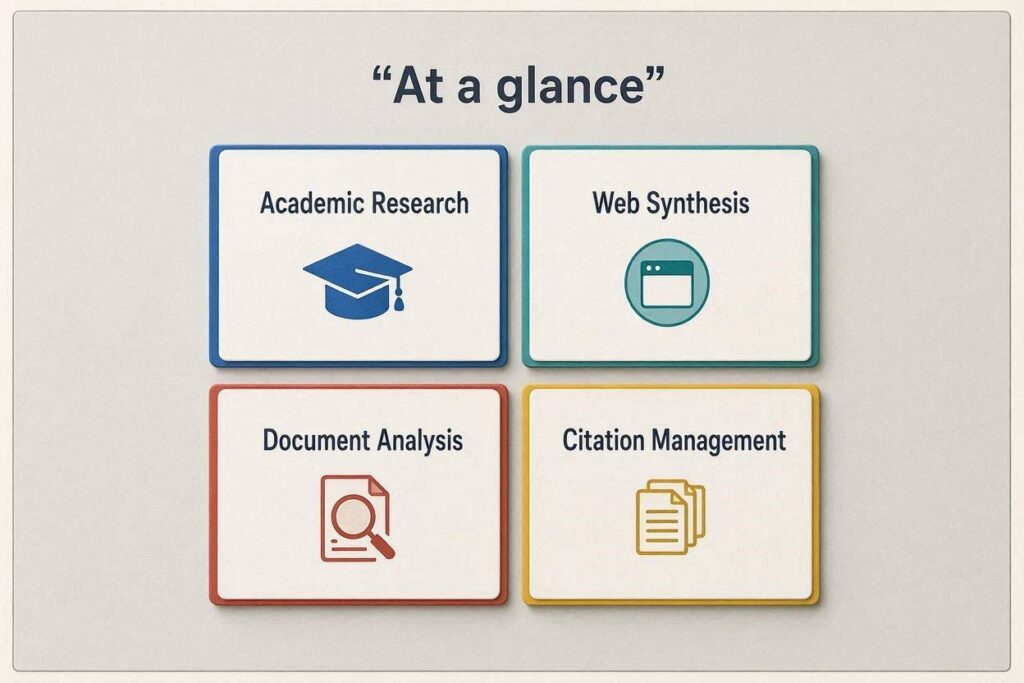
Best AI Research Assistant at a Glance
| Category | Details |
| Focus | Comparing leading AI research assistants and how to match them to specific research needs |
| Primary Challenge | Verifying source accuracy and avoiding AI-generated hallucinations in research output |
| Best For | Students, academics, analysts, journalists, and professionals conducting literature reviews or evidence-based research |
| Reading Time | 9–11 minutes |
| Key Benefit | Faster synthesis of large volumes of information with traceable, verifiable sources |
What Makes an AI Research Assistant “Best” — The Criteria That Actually Matter
Best what in this use case Before we compare tools, it’s best to set up criteria for what we’re even comparing – the “best” tool depends on your intended use case.
1. Source Transparency and Citation Source transparency
A research assistant is only as reliable as its sources. If you show us which document, paper, or site led to each citation, you can always cross-check it with original materials – not just trust us. Some services make this easy by linking directly to the relevant documents, or they will provide cite-ready summaries and notes.
2. Depth vs. Breadth of Search
Some of the tools scan a narrow but tightly controlled database (i.e. Only refereed journal articles. Others try to traverse the open Web. Scholarly researchers usually benefit from depth and precision whereas market researchers or journalists require breadth and up-to-datedness . Neither approach is superior.
3. Document handling and upload
While many research streams begin with current documents in the researcher’s inventory – such as pdfs, excel spreadsheets or reports – having an option to upload them, have it processed, and summarized or used for a cross reference is saving time.
4. Integrations with your current workflow
Plug a research assistant directly into reference manager software (Zotero, EndNote), note-taking applications, or spreadsheet programs to minimize the steps needed to move data from the AI to a final product.
5. Deal With Ambiguity and the Follow-up Questions
Most research doesn’t occur in a single query. The top tools support conversational searching-narrowing from a general request into more precise sub-queries while still maintaining context from the earlier discussion.
Leading AI Research Assistants Compared
General-Purpose Conversational Assistants
These tools (like large language model chat platforms) are good at synthesizing information, breaking down complex ideas in an understandable way, and helping brainstorm research questions. The advantage is their flexibility: they can toggle from reading an uploaded article to a document outline or just to take a question and offer insights, sometimes within the very same interaction. The drawback is, if the version does not allow either document access or web search features to be on, their knowledge cutoff is often based on an internal set of training data, so it will miss very recent events.
Best for: Formulating research questions, summarizing uploaded documents or articles, generating rough sections of a literature review, and helping the reader grasp a new topic regardless of discipline.
Academic Literature Review Tools
This tool is designed to sweep through peer-reviewed literature on a subject and condensing findings into an organized table format. Pulling from academic sources directly, these can scan through hundreds of papers to answer questions such as “What were sample size distributions,” and more.
Best for: Systematic literature reviews and meta-analysis, or academic writing, where accurate citations are crucial to peer reviewed papers.
Evidence-Synthesis and Consensus Tools
These tools, in contrast, are used more specifically for reporting the scientific consensus on a question. Many show a graph of how many studies agree with, oppose, or are neutral to a statement; a function particularly useful when evaluating or quickly grasping newsworthy controversies.
Ideal for: Quick estimations of the scientific consensus, claims assessment, finding conflicting studies.
Real-time web synthesis assistants
Developed from the perspective of direct web searching, these assistants emphasize timeliness and can have their answers include a jump link back to a news piece, website or the most up to date source it can find. These assistants can be less apt for deep academic study but good when events rapidly unfold.
When best to use: Market research; Competitive analysis; Synthesize current events; Or a topic when the time most recently matters over scholarly depth.
Common Mistakes to Avoid When Using an AI Research Assistant
- Using AI summaries to replace original reading – a summary isn’t an answer.
- Relying on the tool and not checking the sources even if link citation exists.
- Applying a “general purpose” chatbot tool for the entire systematic literature review without grounding a search or document. These models do not have access to the live internet or the specific documents, so they operate off training data.
- Not triple-checking contested, important claims. Before reporting anything in a written article, a policy briefing, or a business proposal, confirm important facts against at least one other source.
- Putting too many unrelated requests into one prompt. It’s more effective to break up research into discrete, back-to-back questions for better, more comprehensive results.
- Not stipulating the format. Rather than a broad summary of, say, “something about what happened to X and Y,” ask for “a comparison table of what happened to X and Y” for much more useful results.
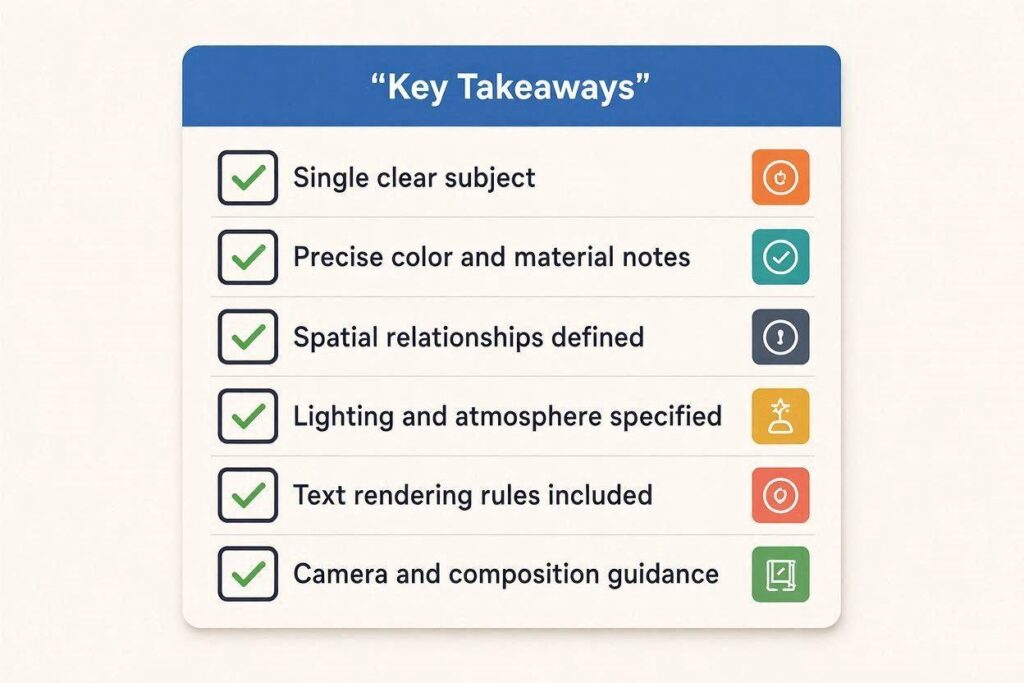
Key Takeaways
- The optimal AI assistant also depends on the type of job – literature searches, web synthesis, and document review all highlight the need for different kinds of assistant.
- Source transparency-being able to see exactly what is prompting the answer, and verify it-is, frankly, the single most important consideration when identifying a reliable assistant.
- All-purpose, conversational assistants are excellent at breaking down the query structure, summarizing a document and explaining concepts, particularly in concert with a web search or the option to upload a document.
- A better fit for systematic review needs where peer-reviewed sourcing is key (describing academic tools will excel here).
- No AI research assistant should be assumed to be fully correct – always fact-check when producing work with material risk.
- Tools that offer native integration with favorite referencing and note-taking software have strong appeal to assist the research -> writing workflow.
- You will always get better results when you are able to perform your research in iterative stages answering well- scoped questions as opposed to a big single query for answers.
Conclusion
There is no best AI research assistant – there is the best assistant for a given research need. A college researcher working on a systematic review won’t need the same features as a financial analyst trying to follow a competitor’s next move, or a journalist racing to check out a fact before going live. Regardless of the tool – AI research assistants generally need one underlying layer of transparency: the capability to connect any assertion of fact to its source, and to be able to check it by yourself. When they become increasingly sophisticated – and more tools will no doubt do so in the years to come – the users who glean the most out of these tools, again, will be the ones most adept at finding an assistant fit for the job and unwilling to skip factchecking along the way.
Frequently Asked Questions
1. Can an AI research assistant replace my current research?
No. An AI research assistant can speed up the initial phase of your research – sourcing, summarizing and collating info – however you’ll STILL have to verify any information against a primary source especially when doing business research, any research relating to a legal case or for a thesis or other academic research piece.
2. Is AI Citations Always Correct?
No, in some cases the output of citations does not contain or match any real sources; this is also called hallucination. Make sure to always follow the citation and check it by clicking through; it is a special concern for general-use conversational models. These do not generally have the capability to live search or link to documents
3. How is an AI research assistant different from my standard search engine?
Standard search engine: Gives you a list of links to scroll through and evaluate. AI research assistant: Synthesizes a variety of sources and brings them together to answer your question or provide a summary, ideally even to tell you where the information was extracted.
4. Must I pay for a premium AI research assistant to obtain good results?
Actually, you don’t. Most platforms have a powerful free version to meet casual or semi-professional research demands. Higher versions just bring you the limits, document handling abilities, or access to large enough document pool which is only worth for professional and heavy usage
5. Will they work on non-English research sources?
Depending on the tool, many contemporary AI research assistance tools can process and summarize documents in multiple languages. Just be aware that some tools may struggle with less commonly studied languages or specialized terminology found in foreign research. Use additional caution and review your Summarized documents very closely when using the assistant with non-English text.